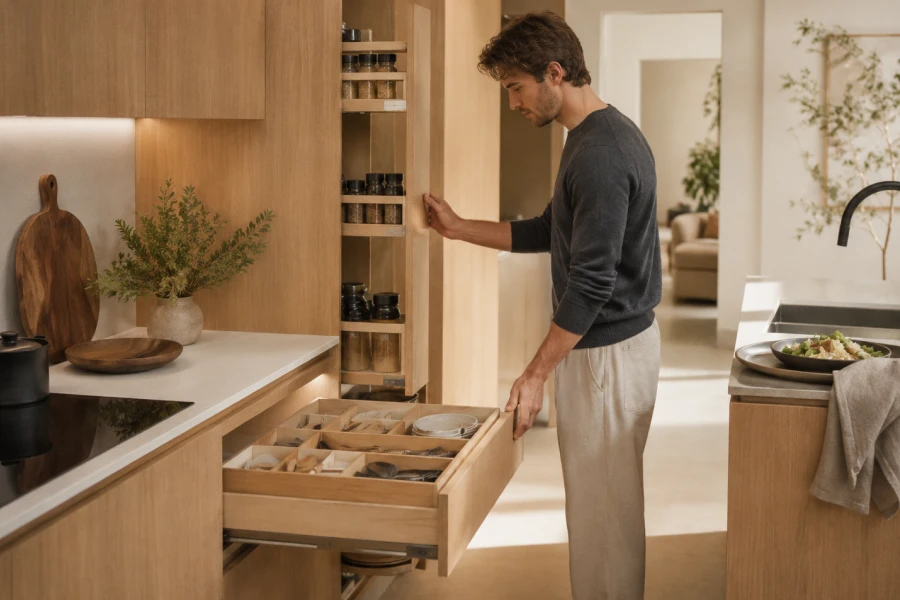
A small kitchen should support daily life, not constantly challenge it. Dinner preparation becomes harder when every surface feels occupied. The answer is not buying more organizers without a plan. Effective space-saving small kitchen solutions begin with understanding how the room actually functions. Notice where groceries land, where dishes collect, and where cooking slows down. Those patterns reveal the real storage problems. The best changes make the kitchen feel easier during busy evenings. They also prevent clutter from returning after a weekend reset. A practical system saves both time and visual space. Small improvements can make a compact kitchen feel far more capable.
Think about your kitchen as a sequence of repeated actions. You unpack groceries, prepare ingredients, cook, serve, and clean. Store tools near the moment when you need them. Put knives, boards, and bowls close to prep areas. Keep pans near the stove when cabinet space allows. A small-space kitchen flow plan reduces unnecessary back-and-forth movement. This makes even narrow kitchens feel more efficient. Grouping by task also reveals duplicates you no longer need. Less searching means less counter clutter. Good function creates a sense of extra room.
Deep drawers can hold far more than random collections of utensils. Add dividers for tools that otherwise spread across counters. Store plates vertically when cabinets allow. Use bins to group food wraps, snacks, and smaller baking pieces. Make every drawer easy to scan in seconds. A clear system discourages the habit of tossing items wherever space appears. Keep the most used categories closest to your main work zone. Review drawers every few months. Remove broken tools and rarely used duplicates. Better drawer organization creates visible relief throughout the kitchen.
Awkward cabinets often become storage for forgotten items. Start by measuring depth, width, and usable shelf height. Choose organizers that match those dimensions instead of forcing generic solutions. Pull-out bins make deep shelves easier to use. Turntables improve access in corner cabinets. A practical compact kitchen storage setup helps every item stay visible. Use risers for mugs, bowls, and canned goods. Create a home for each category. When cabinet interiors work harder, counters can remain clear.
Counters should serve cooking, not become permanent storage. Start by identifying which items live there without purpose. Appliances used weekly may deserve cabinet space. Decorative pieces should earn their place through function or beauty. Use wall-mounted rails for a few daily tools. Add a tray to contain oils, spices, or coffee supplies. A sustainable countertop decluttering habit makes cleanup faster every night. Keep one small landing zone for incoming items. Reset it before bed. Clear counters make the entire kitchen feel more spacious.
Dining zones often need flexibility in compact homes. Choose tables that fold, extend, or move easily when possible. Use benches with hidden storage only if they do not block circulation. Consider stools that tuck completely under countertops. Keep chairs visually light in narrow rooms. Explore compact dining solutions that suit your actual number of diners. Avoid adding seating simply because a room seems to require it. A smaller, smarter arrangement can feel much more inviting. Good dining design protects both movement and comfort.
Pantry clutter grows when food categories do not have clear boundaries. Group breakfast items, snacks, cooking staples, and baking ingredients separately. Use containers only when they solve a real visibility problem. Keep frequently used food at eye level. Place backup items on higher shelves. A simple kitchen zoning techniques routine makes grocery storage faster. Check expiration dates before every major shop. Avoid buying duplicates that disappear behind other packages. A controlled pantry prevents overflow into cabinets and counters. Order supports better meals and a calmer room.
The strongest small kitchen systems are easy to repeat. They do not demand an hour of maintenance every day. Choose storage ideas that match your habits. Keep frequently used tools easy to reach. Put less-used items out of sight. Reset one surface before leaving the kitchen each evening. Let function guide every purchase. A compact room feels better when nothing fights for attention. With smart storage and steady routines, your kitchen can support even the busiest weeknight.



Leave a comment