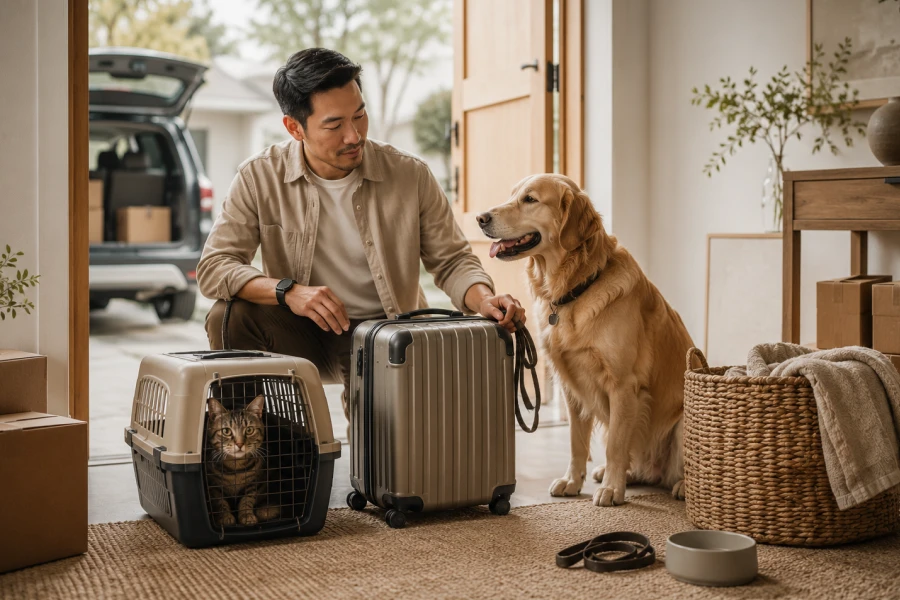
Dogs and cats experience a move in very different ways. Dogs often respond to new energy and changing routines. Cats usually notice missing furniture, unfamiliar smells, and altered territory first. Moving with cats and dogs requires a plan that respects both instincts. One household may need separate spaces, carriers, and calming routines. The most useful strategy begins before the last box closes. Familiarity becomes a powerful tool during major change. Pets do not need every detail explained. They need safe containment, patient attention, and predictable care. With the right preparation, travel day can feel controlled rather than chaotic.
Do not assume every pet will tolerate the same moving routine. Dogs may benefit from a longer walk before travel. Cats usually need quiet containment away from open doors. Build distinct plans for each animal in your household. Use a dog moving essentials list for collars, leashes, food, and outdoor breaks. Prepare a separate space for feline supplies and carrier comfort. Keep their favorite items nearby during loading. Assign responsibilities before helpers arrive. Clear roles reduce the risk of confusion. Pets stay safer when every adult knows what happens next.
Many cat owners wait until travel day to bring out the carrier. That choice often makes the carrier feel like a warning. Instead, leave it open in a familiar room beforehand. Add soft bedding and occasional treats inside. Let the cat investigate without pressure. A thoughtful cat travel preparation routine makes confinement less frightening. Practice closing the door briefly on calm days. Take short car rides if distance travel is planned. Cover part of the carrier if visual stimulation causes distress. These simple practices make the actual journey feel far more manageable.
Departure is often the loudest and least predictable part of moving. Doors open constantly while people carry boxes through hallways. Place cats in a closed room or secure carrier before the activity begins. Keep dogs on leash or in a quiet enclosed area. Use signage for helpers when needed. A simple pet moving checklist can confirm each animal is accounted for before leaving. Check identification tags one final time. Load animals last rather than early. This shortens the amount of waiting inside vehicles. A calmer departure supports a calmer arrival.
Safe travel demands more than getting pets inside the car. Animals should remain secured while the vehicle moves. Avoid letting cats roam freely between seats. Do not leave dogs unattended in warm or cold conditions. Schedule rest stops around your pet’s physical needs. Bring water in a spill-resistant container. A clear moving with anxious pets strategy can help owners recognize early stress signals. Excess panting, drooling, shaking, and unusual silence may need attention. Keep your voice low and movements unhurried. Your calm behavior provides reassurance throughout the journey.
Once you arrive, resist the urge to show pets everything immediately. Choose one quiet room with secure windows and closed doors. Add familiar bedding, bowls, litter supplies, and toys. Let animals rest there while furniture comes inside. Keep routines as close to normal as possible. This space becomes a buffer between travel stress and exploration. Offer short, supervised introductions to nearby rooms. Give cats extra time before they access larger areas. Walk dogs outside on leash before indoor settling. Slow discovery creates confidence without overwhelming their senses.
New homes take time to become emotionally familiar. Continue meal schedules even when unpacking feels urgent. Spend brief, focused time with each pet every day. Give dogs consistent bathroom breaks and neighborhood walks. Keep cats indoors until they seem settled. A flexible pet relocation planning process helps families adjust when behavior changes. Watch for appetite shifts, hiding, or agitation. Contact a veterinarian when concerns continue. Most pets improve with patience and stable routines. Their comfort grows as the home begins to feel predictable.
The best moving plan makes room for your pets’ personalities. Confident animals may explore quickly. Sensitive animals may need several quiet days. Neither response is wrong. Avoid comparing one pet’s progress with another’s. Keep familiar objects available even after unpacking ends. Let routine, calm voices, and steady care do most of the work. The move becomes easier when pets feel included rather than managed. Your attention protects them during a major change. In return, their familiar presence makes the new house feel warmer sooner.



Leave a comment