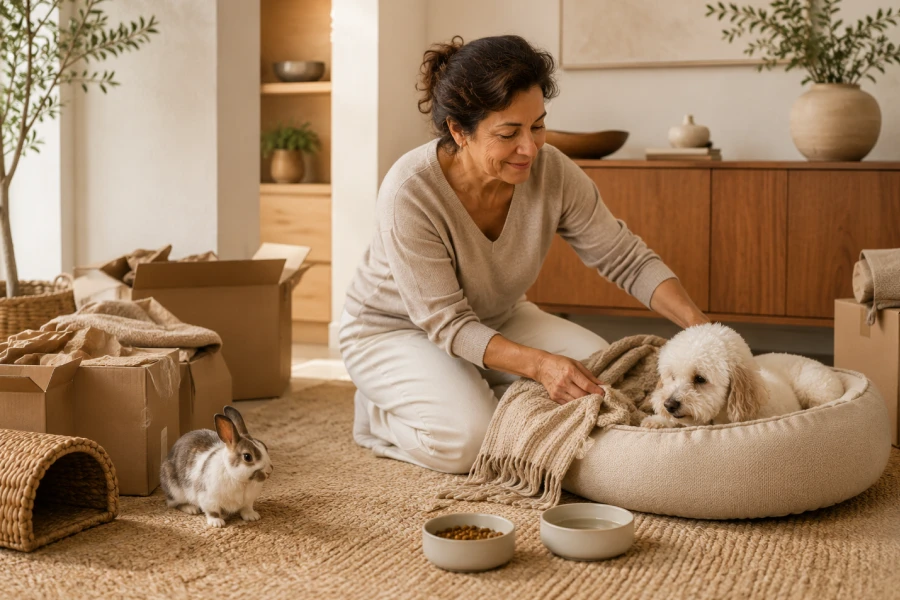
A smooth move is not only about labels, boxes, and truck schedules. It is also about protecting the animals who depend on your routines. Stress-free pet moving begins with recognizing that pets experience transition through their senses. Their usual spaces disappear before they understand why. New voices and unfamiliar rooms can feel intense. A steady plan turns uncertainty into manageable steps. It also helps people focus on care when their own energy runs low. Pets notice the emotional pace of a household. When owners slow down, animals often settle faster. That is why a gentle approach matters from the first packed box.
Last-minute preparation creates pressure for every member of the household. Start organizing pet needs before packing becomes urgent. Confirm travel rules for hotels, rental homes, or flights. Refill prescriptions earlier than usual. Update tags and microchip information before your address changes. Add a small animal relocation plan if you have rabbits, birds, reptiles, or hamsters. These animals often need stable temperatures and secure enclosures. Keep species-specific food available outside packed boxes. Ask your veterinarian about travel considerations. Early preparation gives you more options when plans shift.
Packing changes the visual language of a familiar home. Empty shelves and stacked boxes can make animals feel unsettled. Give pets a room that stays mostly unchanged until departure. Keep their bed, water, and toys there each day. Use a baby gate or closed door if needed. This protects them from falling boxes and repeated door openings. Offer calm play or quiet enrichment during busy sessions. Avoid forcing pets to inspect every packed room. Let them choose when to approach the changes. A protected space gives animals relief from the energy elsewhere.
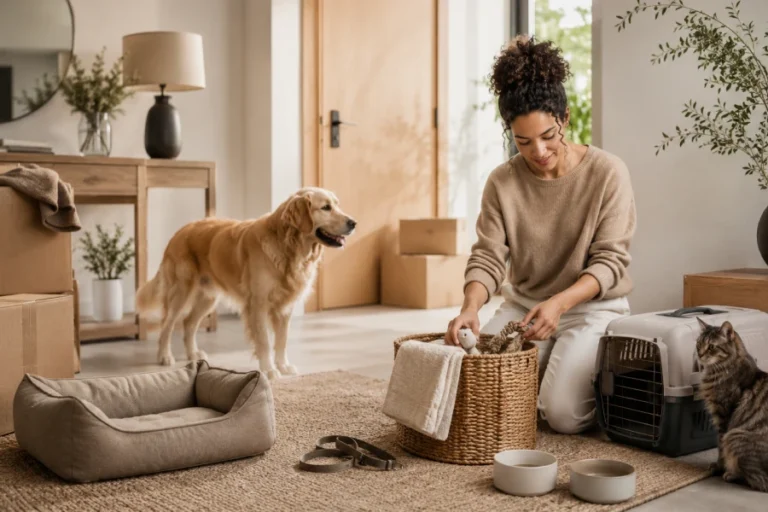
Travel comfort depends on details that are easy to overlook. Test carriers, harnesses, and restraint systems before the trip. Make sure every fastener closes securely. Pack extra cleaning materials for unexpected messes. Bring familiar towels because scent offers comfort. A thoughtful pet relocation timeline can include meal timing around travel hours. Avoid large meals immediately before car rides when motion sensitivity is likely. Keep water available during appropriate breaks. Check carriers for airflow and temperature comfort. Prepared travel supplies make you more responsive when pets need support.
Some pets respond to change with unusual behavior. They may hide, bark more, stop eating, or seek constant closeness. Those reactions signal stress rather than disobedience. Do not punish an animal for needing reassurance. Reduce stimulation wherever possible. Create short quiet breaks during intense moving activity. A reliable pet-friendly moving routine gives sensitive animals familiar anchors during each day. Keep voice tone calm and movements slow. Offer enrichment that matches their normal preferences. Patience often works better than adding new distractions. Consistent care helps nervous pets recover their balance.
The first night in a new home can feel especially unfamiliar. Choose one secure room before unloading the rest. Add bedding, water, food, and low lighting. Keep the space quiet while the household settles. Avoid introducing guests, neighbors, or other pets immediately. A predictable room helps animals rest after travel. Sit nearby without demanding interaction. Let pets approach when they feel ready. Check doors and windows before opening carriers. Familiar objects make that first evening less overwhelming. A peaceful night creates momentum for the following days.
Adjustment does not end when boxes disappear. Pets may need time to learn new sounds, walks, and household patterns. Keep feeding and exercise routines steady for several weeks. Introduce new outdoor areas gradually. Use a new home pet adjustment approach that respects individual pace. Watch for small improvements rather than expecting instant normality. Praise calm exploration and relaxed behavior. Give animals places where they can retreat quietly. The new house becomes familiar through repetition. A patient owner helps turn a strange place into trusted territory.
A successful move is not measured by how quickly every box is unpacked. It is measured by whether your pet feels safe beside you. That safety comes from preparation, routine, and close observation. Keep your plan practical enough to use during busy moments. Leave room for unexpected needs. The most important supplies are often simple: water, familiar bedding, secure containment, and time. Pets do not need a flawless relocation. They need a calm person who notices what makes them comfortable. That is the foundation of a softer landing.


Leave a comment