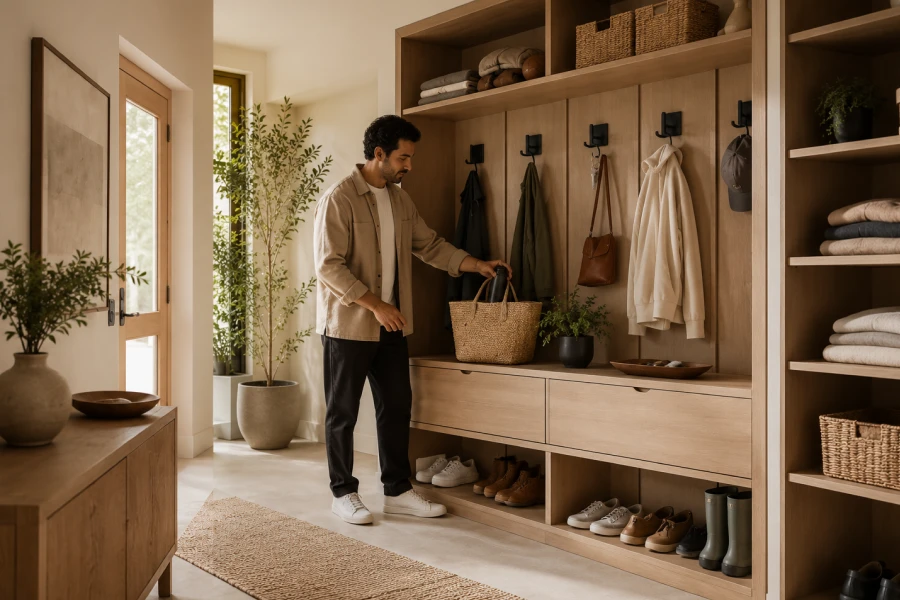
Most clutter problems begin quietly with one misplaced item. Then a surface becomes a pile, and the pile becomes a project. The best response is not waiting for a major reset. Smart decluttering systems help prevent small buildup from spreading through the home. They create simple paths for items, decisions, and daily routines. A useful system does not require constant discipline. It should make the right action feel easier than the messy one. Prevention matters because it protects both time and mental energy. Small routines keep your home from becoming another source of pressure. When systems work, order becomes easier to maintain than chaos.
Every item entering a home should have a likely next step. Mail needs a sorting point. Shoes need a landing area. Laundry needs a place to wait before washing. Without pathways, objects collect on the nearest surface. Look for the moments when clutter begins. Then create a simple destination nearby. A clutter prevention workflow makes these decisions easier to repeat. Keep the path short and visible. Complicated storage rarely survives busy days. Simple pathways protect your space before piles appear.
Too many small decisions invite procrastination and clutter. Make routine choices easier by deciding them once. Keep a donation bag in a consistent location. Use one tray for incoming keys and mail. Create a small reset basket for items that belong elsewhere. These choices reduce the number of decisions required each evening. They also make shared spaces easier for everyone to use. A system becomes powerful when it works during low-energy moments. Choose defaults that support the behavior you want. Less friction creates more consistency. Consistency prevents clutter from gaining momentum.
Clear categories make it easier to put items away quickly. Do not create vague storage zones called miscellaneous. Group objects by purpose and frequency of use. Keep daily items close to where they are needed. Store seasonal items farther away but still easy to locate. A personalized organizing plan helps categories reflect your household rather than an idealized version. Give each family member a simple, understandable place for belongings. Review categories when they become overfilled. Clear homes rely on clear decisions. Categories turn tidying into a quick return rather than a stressful search.
Long cleaning sessions are useful, but short resets prevent major buildup. Choose a few predictable moments during the week. Ten minutes before bed can protect the main living spaces. A small reset after meals can keep the kitchen ready. Use timers when you need a clear stopping point. A helpful organizing routine automation structure can make these actions feel habitual. Keep the task list focused on returning items, not deep cleaning. Short windows reduce resistance. They also make progress feel immediate. Repeated resets keep a home from tipping into disorder.
Recurring clutter gives you useful information about your routines. Notice which surfaces refill within a day or two. That spot may need a closer storage solution. It may also reveal an unresolved category of possessions. Do not simply clear the pile again. Ask why it appeared there. A digital home organization review can help you track patterns over time. Use those patterns to improve the system. Small adjustments are often more effective than a complete redesign. Attention turns recurring frustration into practical insight.
Maintenance should not feel like an endless punishment for living. It works best when tasks are quick, visible, and tied to existing habits. Put away items while waiting for coffee or dinner. Sort incoming mail before it reaches the counter. Reset one room while speaking on the phone. A flexible virtual decluttering assistant approach can support reminders and task sequencing. The goal is not doing more. It is making small actions easier to repeat. Maintenance protects the work you have already completed. That protection keeps your home feeling calmer over time.
A prevention-focused home system supports more than appearance. It protects time, attention, and energy for the things you value. Start with one surface that always gathers clutter. Create a simple pathway for the items that land there. Test the system for a week. Adjust it based on what actually happens. Let your home teach you where more support is needed. Smart systems grow through observation, not criticism. With each small improvement, your space becomes easier to return to. That is how lasting calm begins.



Leave a comment